

Key Takeaways
- Brown leaf tips often respond to everyday care conditions rather than being a sign that your plant is seriously unhealthy.
- Inconsistent watering, low humidity, excess fertiliser or mineral buildup, too much direct sunlight, and root problems commonly cause leaf-tip browning.
- Damaged brown tissue will not turn green again, so recovery is better judged by the condition of healthy new growth.
- Checking your plant’s potting mix, light exposure, drainage, and feeding routine can help you identify the likely cause without making too many changes at once.
- Choosing suitable indoor plants, pots, fertilisers, and care essentials from Arbour can help you create growing conditions that are easier to maintain over time.
Introduction
Noticing brown leaf tips on your indoor plant can be worrying, especially if your plant has otherwise been growing well. While browning may seem like a sign that your plant is unhealthy, it is often your plant’s way of responding to changes in its environment or care routine.
The good news is that leaf tip browning does not always indicate a serious problem. In many cases, small adjustments to watering, light, humidity, fertiliser use, or root conditions are enough to prevent further damage. The more useful approach is to identify the most likely cause first, then adjust your care routine carefully instead of changing everything at once.
What Do Brown Leaf Tips Mean?
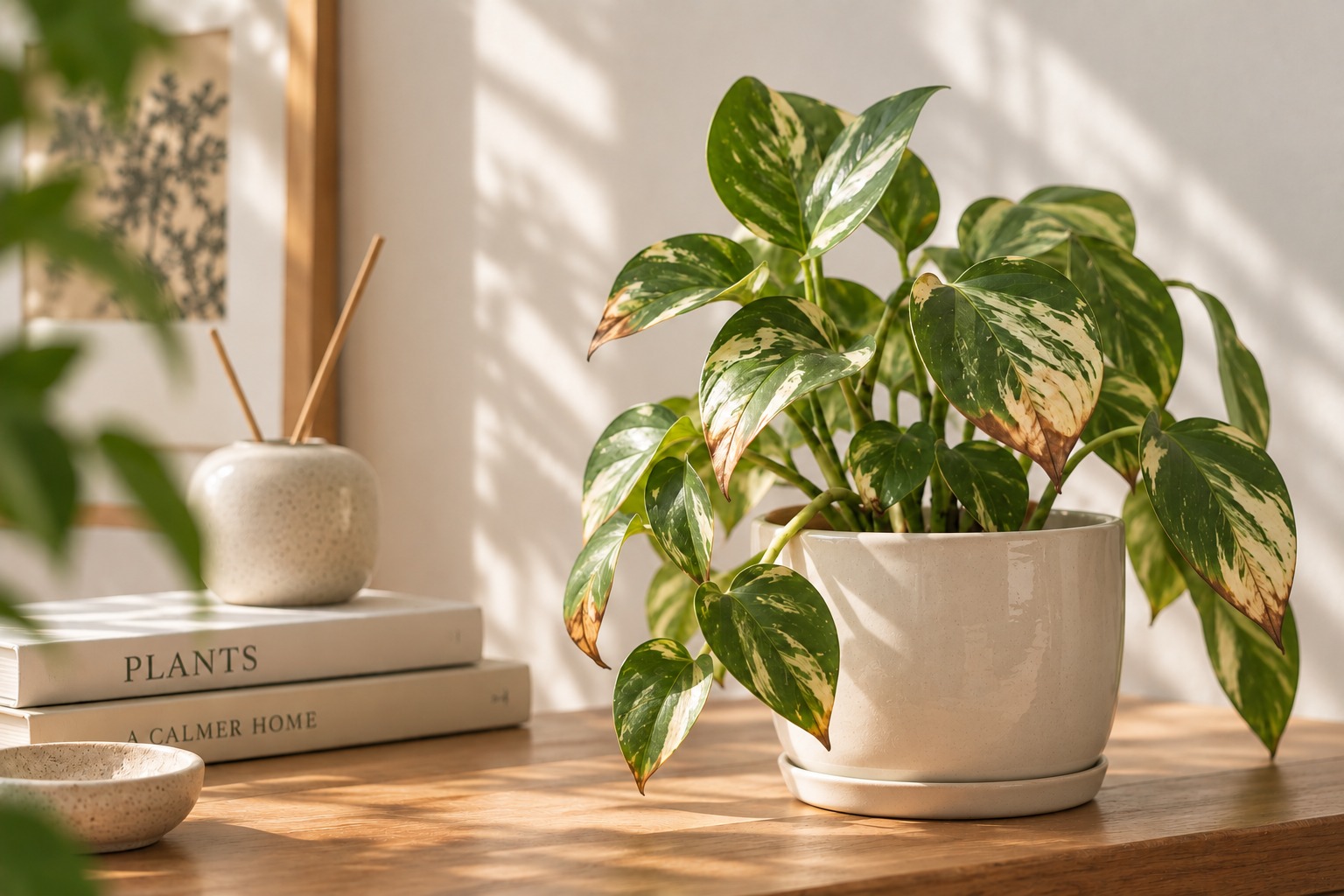
Brown leaf tips occur when tissue at the ends of a leaf dries out and dies, turning brown, crispy, or brittle. The affected tissue will not turn green again, but healthy new leaves can continue to develop once you address the underlying issue.
Browning may appear only at the tip, spread along the edges, or eventually affect larger sections of the foliage. These patterns, along with the condition of the rest of the plant, can provide useful clues about the cause. Learning how to take care of plants by observing watering, lighting, humidity, and drainage can also help you spot small changes before they become more obvious.
Common Reasons Leaf Tips Turn Brown
Inconsistent Watering
One of the most common causes is inconsistent watering. Letting the potting mix become excessively dry before watering, or alternating between very dry and very wet conditions, can stress the plant and contribute to crispy leaf edges.
Rather than watering on a fixed schedule, check the potting mix regularly and water according to your plant’s needs.
Low Humidity
Many popular indoor plants originate from tropical environments where humidity is naturally high. Even when you keep indoor plants in Singapore, air-conditioned rooms can create much drier conditions around them, particularly if they are positioned close to cooling vents.
If low humidity is contributing to the problem, you may notice browning on several leaves while the rest of the plant still looks healthy. Try moving the plant away from direct air-conditioning airflow and placing humidity-loving plants in a more stable, less drying part of the room.
Mineral or Fertiliser Buildup
Over time, dissolved minerals from tap water or excessive fertiliser can accumulate in the potting mix. This buildup may interfere with the roots’ ability to take up water effectively, eventually contributing to brown leaf tips.
Excess soluble salts and fertiliser can contribute to browning at leaf tips. Follow feeding instructions carefully when using plant fertiliser, and avoid applying more than your plant requires. Occasionally flushing the potting mix with clean water may also help reduce accumulated salts.
Too Much Direct Sunlight
Although indoor plants need sufficient light to grow, prolonged exposure to harsh afternoon sun can cause leaf scorch. Brown, dry patches may develop alongside faded or bleached areas of foliage.
Moving your plant to a position with bright, indirect light can help protect more sensitive leaves while still providing the light needed for healthy growth.
Root Problems
If roots remain constantly wet because of poor drainage or overwatering, they may struggle to function properly. Ironically, this can cause brown leaf tips even when the potting mix still feels wet.
Check that your pot has adequate drainage holes and allow excess water to drain freely. Persistent wetness, soft roots, or an unpleasant smell may indicate root rot, which requires closer attention.
Should You Be Concerned?
Leaf-tip browning is usually a cosmetic issue rather than an emergency, particularly if the rest of your plant continues producing healthy new growth.
If only a few older leaves are affected and the problem doesn’t spread, your plant will often respond well once you adjust its care routine. However, if browning continues to appear on new leaves or affects a large portion of the plant, take a closer look at its growing conditions to identify the underlying cause.
How to Help Your Plant Recover
Start by observing your plant rather than making several changes at once. Check the moisture in the potting mix, review how much light the plant receives, and consider whether it has recently been exposed to air conditioning, intense sunlight, or another environmental change.
If the mix feels compacted or remains wet for long periods, inspect the drainage and consider repotting where appropriate. Where fertiliser buildup may be contributing, reduce feeding temporarily and flush the potting mix with clean water according to the plant’s needs.
You can trim away brown portions if you prefer a tidier appearance. Use clean scissors and follow the leaf’s natural shape without removing healthy tissue.
Most importantly, give your plant time to respond. Recovery is better judged by healthy new leaves than by older tissue that has already been damaged.
When Brown Leaf Tips May Indicate a Bigger Problem
While brown leaf tips are commonly linked to everyday care issues, they can sometimes appear alongside more significant problems. Inspect your plant more closely if you notice:
- Browning spreading rapidly across several leaves.
- Soft, black, or mushy stems near the base.
- Yellowing leaves with persistently wet potting mix.
- An unpleasant smell coming from the pot.
- Visible pests such as mealybugs, scale insects, spider mites, or fungus gnats.
- Sudden leaf drop or a prolonged lack of new growth.
If these symptoms appear, check the roots and growing conditions so you can address the likely cause before the problem progresses.
Conclusion
Brown leaf tips are a common concern among indoor plant owners, but they often indicate that your plant needs a manageable adjustment rather than a complete change in care. Paying attention to watering, humidity, light, fertiliser use, and root health can help you prevent further damage and support healthier new growth.
Every plant responds differently to its surroundings, so regular observation remains one of the most useful habits you can develop. At Arbour, you can find indoor plants alongside potting mixes, fertilisers, pots, and other care essentials to help you create conditions suited to your plant’s needs. Explore Arbour’s collection to choose plants and supplies that make ongoing indoor plant care easier to manage.