

Key Takeaways
- How often to fertilise your plants depends on the plant species, growth rate, light levels, growing medium, and fertiliser type.
- Fast-growing tropical foliage plants may benefit from feeding every two to four weeks during active growth, while slower-growing plants such as Snake Plants, ZZ Plants, and succulents generally need less frequent feeding.
- A flexible plant fertiliser schedule is more useful than following the same routine year-round, especially when growth slows or growing conditions change.
- Signs such as brown leaf tips, mineral build-up, yellowing, or reduced growth can indicate that you need to adjust your feeding routine.
- Choosing a fertiliser that suits your plant type, growth stage, and growing medium can help you maintain a more balanced feeding routine over time.
Introduction
With potted indoor plants, fertilising is about replacing nutrients in a limited root zone, not simply adding more products to the routine. Over time, nutrients in the growing medium become depleted as plants absorb them to grow new leaves, roots, flowers, and stems. Unlike plants growing in the ground, potted plants cannot access nutrients beyond the confines of their container, so regular feeding can become an important part of long-term plant care.
However, more fertiliser does not necessarily mean healthier plants. Feeding too often can be just as harmful as not feeding enough, while the ideal plant fertiliser schedule depends on factors such as the plant species, growing conditions, fertiliser type, and time of year.
Understanding how often to fertilise plants allows you to support healthy growth without overwhelming your plants or wasting fertiliser.
Why Regular Feeding Supports Healthier Plant Growth
Water keeps plants hydrated, but fertiliser supplies nutrients that support growth. Nitrogen (N), phosphorus (P), and potassium (K) are three of the main nutrients commonly found in fertilisers. Nitrogen supports foliage growth, phosphorus contributes to root development and flowering, and potassium supports overall plant function and vigour.
Houseplants have a limited amount of growing medium from which to access nutrients, and regular feeding can help replenish nutrients as they are used during growth or flushed out through watering.
This is especially relevant when you are caring for indoor plants in Singapore, where bright windows, warm interiors, air-conditioned rooms, and plant species can create very different growth rates even within the same home. That is why how often to fertilise plants should be tied to observed growth, not simply to a calendar reminder.
Recommended Feeding Schedules for Common Houseplants
No single schedule suits every indoor plant. How often to fertilise plants depends on the plant’s natural growth rate, the light it receives, the growing medium, and the type of fertiliser you use. The following recommendations provide a general guide for diluted liquid fertilisers, but you should always follow the instructions on your chosen plant fertiliser.
Tropical Foliage Plants
Popular foliage plants such as Monstera, Philodendron, Pothos, and Syngonium are relatively active growers. During periods of steady growth, feeding every two to four weeks is generally sufficient to support healthy foliage and root development. If growth slows because of lower light or changing conditions, extend the interval between applications.
Flowering Houseplants
Flowering plants such as Peace Lilies, Anthuriums, and African Violets can benefit from regular feeding while they are actively producing new growth and blooms. A diluted fertiliser applied every two to four weeks during active growth may be suitable, but more sensitive plants may need a weaker solution or a longer interval, so follow the product instructions and your plant’s response.
Slow-Growing Indoor Plants
Snake Plants, ZZ Plants, and many succulents generally have lower nutrient requirements than faster-growing species. Feeding every six to eight weeks during active growth is usually enough. Applying fertiliser more frequently is unlikely to accelerate growth and may increase the risk of over-fertilisation.
Ferns and Other Sensitive Plants
Ferns, Calatheas, and Marantas can be more sensitive to concentrated fertilisers. A diluted fertiliser applied about once every four weeks during active growth may provide enough nutrition while reducing the risk of leaf damage.
These differences are why feeding indoor plants according to their growth habits and conditions is usually more useful than applying the same routine to every pot.
Knowing When to Adjust Your Feeding Routine
Instead of following the same schedule year-round, watch how your plants respond and adjust as needed. Steady new leaves, normal leaf size, healthy colour, and continued root or shoot growth can all indicate that the plant is responding well to its current care routine.
If your plant is growing vigorously in bright conditions, maintaining its regular feeding schedule may be appropriate. However, when growth slows because of reduced light, cooler conditions, recent repotting, or recovery from stress, it can be better to increase the time between applications.
The growing medium can also influence how often to fertilise plants. With a soil-free growing medium, feeding needs depend on how the medium is formulated, whether it already contains nutrients, the plant’s requirements, and how often you water. Checking the product instructions alongside the fertiliser label can help you avoid unnecessary nutrient additions.
If you notice brown leaf tips, a white mineral crust on the surface, or yellowing shortly after feeding, your current routine may be too frequent or the fertiliser too concentrated. Progressively smaller new leaves, pale foliage, or noticeably slower growth may point to feeding, but only after you have checked light, watering, drainage, root health, pot-bound roots, and pests.
By treating your plant fertiliser schedule as a flexible guide rather than a fixed calendar, you can provide nutrients when your plants can use them most while reducing the risk of overfeeding.
Conclusion
A successful plant fertiliser schedule matches feeding to the plant rather than fertilising as often as possible. Plant type, growth rate, light, growing medium, and fertiliser formulation all influence how often to fertilise your plants, so your routine may need to change as conditions change.
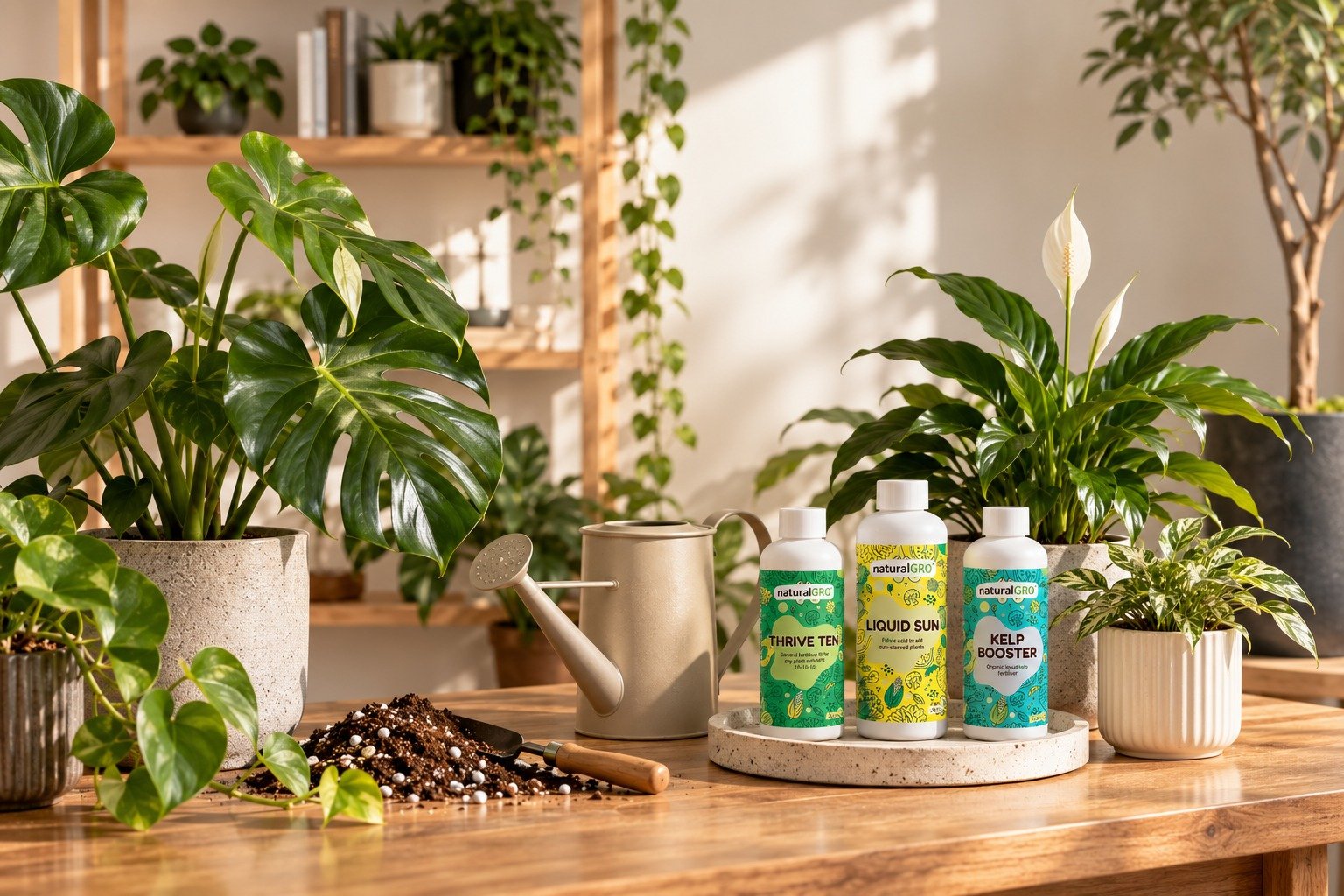
Choose a fertiliser that suits your plant type, growth stage, growing medium, and watering routine. Explore Arbour’s NaturalGro® range for plant nutrition options suited to different plant categories, root conditions, and indoor growing needs, or reach out to us for guidance on selecting a fertiliser that fits your plants and growing medium.
