

Key Takeaways
- Misting plants can provide a short-term boost in surface moisture, but it does not create lasting humidity on its own.
- Tropical and humidity-loving houseplants may tolerate occasional misting, while succulents, cacti, snake plants, ZZ plants, and fuzzy-leaved species are generally better kept dry.
- Misting should never replace proper watering, suitable airflow, or an appropriate growing medium around the roots.
- If leaves stay wet for too long, particularly in areas with poor air circulation, the risk of spotting and fungal problems can increase.
- Base misting on your plant’s natural habitat, leaf type, indoor humidity, airflow, and overall growing conditions.
Introduction
Many indoor plant owners encounter misting early, whether through online care tips, plant hobbyists, or general houseplant advice. A quick spray of water is often said to increase humidity, keep leaves healthy, and help tropical plants thrive. While it seems like a simple way to care for houseplants, misting plants is also widely misunderstood.
Misting can be beneficial in certain situations, but it isn’t essential for every plant or every home. Some species respond well to occasional misting, while others prefer dry leaves. Understanding what misting actually does, and what it does not do, can help you decide whether it deserves a place in your routine when learning how to take care of plants.
What Does Misting Actually Do?
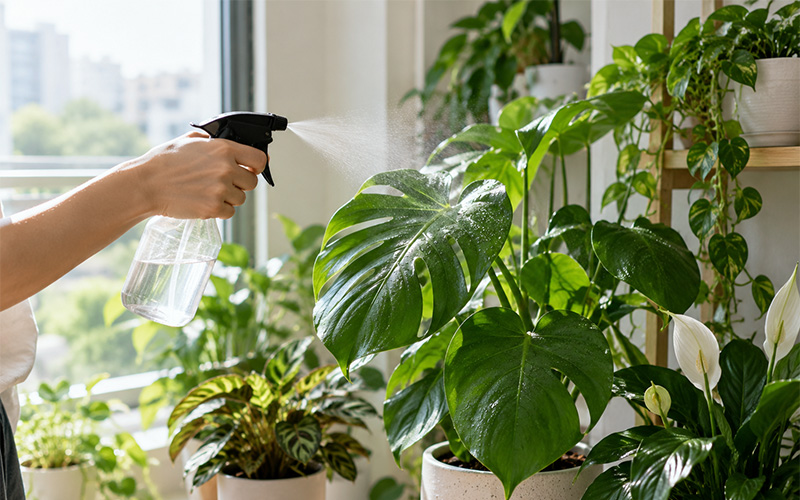
Misting involves spraying a fine layer of water onto a plant’s leaves using a spray bottle. Unlike watering, which delivers moisture to the roots through the growing medium, misting only wets the foliage surface.
Many plant owners practise misting plants because they hope to recreate the humid conditions found in tropical environments. Spraying can Spraying can briefly dampen the air and leaf surface around the foliage, but that effect usually fades as the droplets evaporate.
Besides adding surface moisture, misting may help rinse away light dust and encourage more regular plant inspections. However, it should not replace proper watering or a suitable growing environment. Light, airflow, watering habits, and the quality of the growing medium have a greater influence on long-term plant health.
The Pros and Cons of Misting Indoor Plants
When used appropriately, misting plants can offer a few benefits. It may provide extra surface moisture for tropical houseplants growing in air-conditioned rooms, help remove light dust, and encourage you to look more closely for pests, damaged leaves, or early signs of disease.
However, misting has clear limitations. It cannot correct a consistently dry room on its own, and the condition of the leaves after spraying matters. If foliage stays wet too long, especially where air circulation is poor, fungal problems and spotting become more likely. Misting also provides only a temporary change in humidity, so broader measures such as a humidifier or grouping compatible plants together may be more useful when indoor air remains consistently dry. This houseplant care guide offers further practical guidance on managing the broader growing conditions that affect indoor plants.
Some plants also respond poorly to frequent misting. Succulents, cacti, and species with fuzzy leaves generally prefer dry foliage, while excessive moisture around tightly packed leaves or crowns may encourage rot. Rather than using the same routine for every plant, consider how the air-conditioning, window placement, and airflow affect the indoor plants in Singapore you keep at home.
Common Misting Myths and What You Should Do Instead
One of the biggest misconceptions is that every indoor plant benefits from misting. Many popular houseplants grow perfectly well without it, particularly species adapted to drier conditions.
Another common myth is that misting replaces watering. Damp leaves do not mean hydrated roots. Plants still depend on moisture in their growing medium, so your watering routine and choice of medium matter more for maintaining appropriate root conditions.
It is also easy to assume that spraying several times a day can substitute for broader humidity management. If an air-conditioned room remains consistently dry, a humidifier or grouping compatible plants together may provide more stable conditions than repeatedly wetting the foliage.
Misting isn’t the same as cleaning your plants. A light spray may loosen some surface dust, but larger leaves usually benefit more from being wiped with a damp cloth, while delicate foliage may require a soft brush.
If you choose to mist, use clean water and apply a light spray in the morning. This gives the foliage time to dry during the day and lets you monitor whether moisture lingers.
Which Indoor Plants Benefit From Misting?
Not all houseplants have the same moisture preferences. Tropical, humidity-loving houseplants are generally more likely to tolerate occasional misting, especially when airflow is good enough for the leaves to dry properly.
Ferns, calatheas, prayer plants, peace lilies, certain philodendrons, and some orchids may tolerate occasional misting when conditions are suitable. Misting should still remain a small part of their overall care rather than becoming a fixed daily routine.
Other plants are better kept dry. Succulents, cacti, snake plants, and ZZ plants generally gain little from routine misting. Plants with fuzzy foliage, such as African violets, are usually better kept dry too, because water can remain trapped on the leaf surface. For these plants, avoid routine leaf spraying and use gentler cleaning methods where appropriate.
Rather than focusing only on moisture above the plant, consider conditions around the roots. A suitable soil-free growing medium can help balance moisture retention with drainage and aeration. This matters indoors because a medium that stays waterlogged too long can reduce the air available around the roots, no matter how carefully you manage leaf moisture.
Conclusion
Misting can be useful in the right circumstances, but it should not be treated as a requirement for every houseplant. Your plant’s natural habitat, leaf type, airflow, watering needs, and growing medium all help determine whether misting is appropriate.
At Arbour, you can choose indoor plants and NaturalGro® growing media based on the conditions you can realistically provide at home. Because root-zone moisture depends on balanced moisture retention, drainage, and aeration, the right medium should support the plant below the surface instead of leaving misting to carry the routine. Contact Arbour for help selecting plants and growing media that suit your indoor environment and support balanced moisture management above and below the roots.
